
Bakhoor
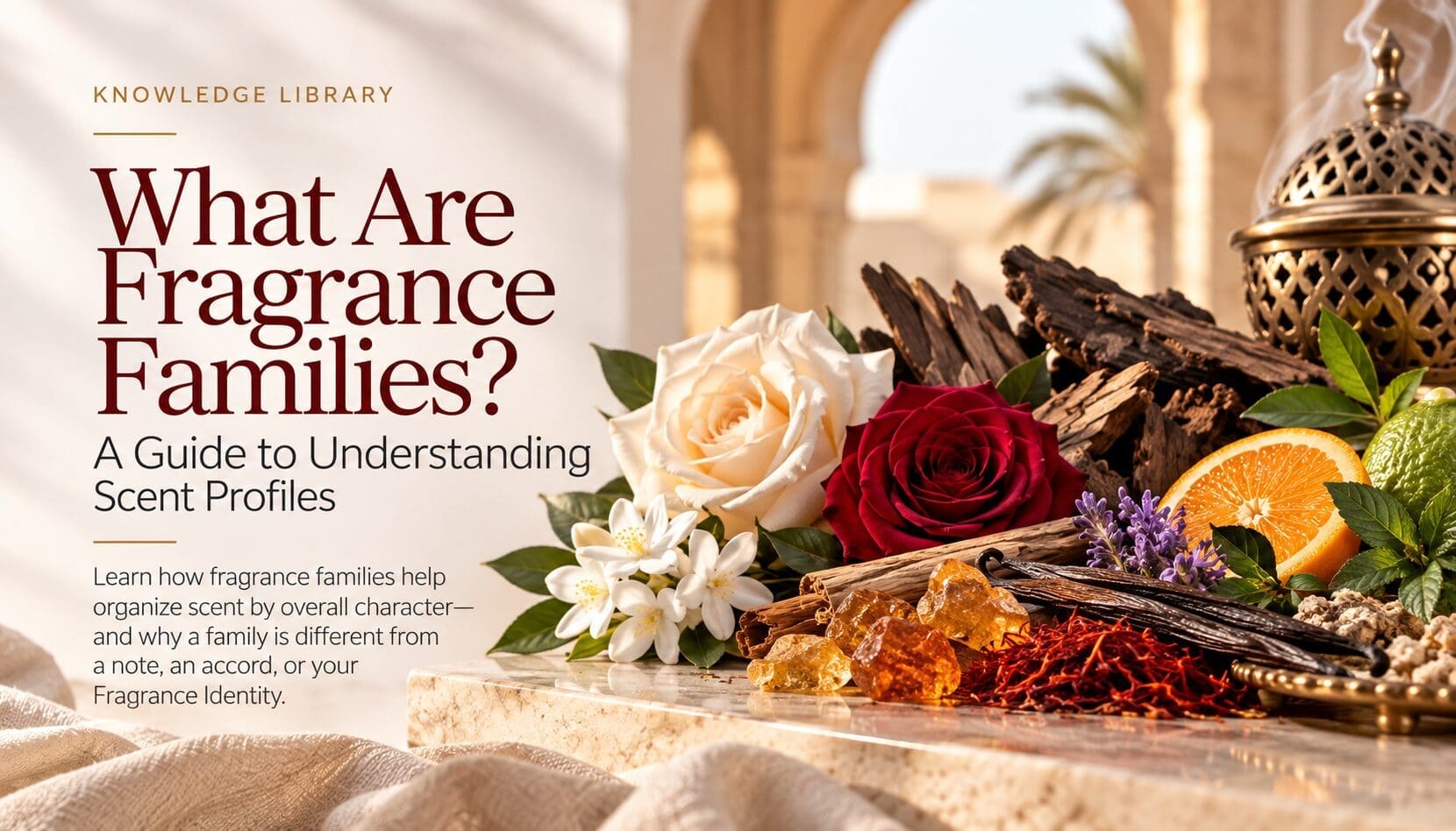
Fragrance families help organize scents by their broader character—from floral and woody to amber, fresh, aromatic, gourmand and leather. Learn how fragrance families work, why classification systems differ, and why a family is not the same as a Fragrance Identity.

Fragrance notes are the language used to describe what a scent may smell like—but they are not always literal ingredients. Learn how notes, materials, accords, fragrance families, and Fragrance Identity differ, and how to read scent descriptions with greater confidence.

There is a moment when a fragrance becomes more than something you purchased. Perhaps it becomes the scent you reach for before an important meeting. The fragrance you wear for Jumu’ah. The oil associated with an evening ritual, a wedding,…

A fragrance accord brings several scent elements together to create one recognizable impression. Learn how accords give fragrance oils their character.
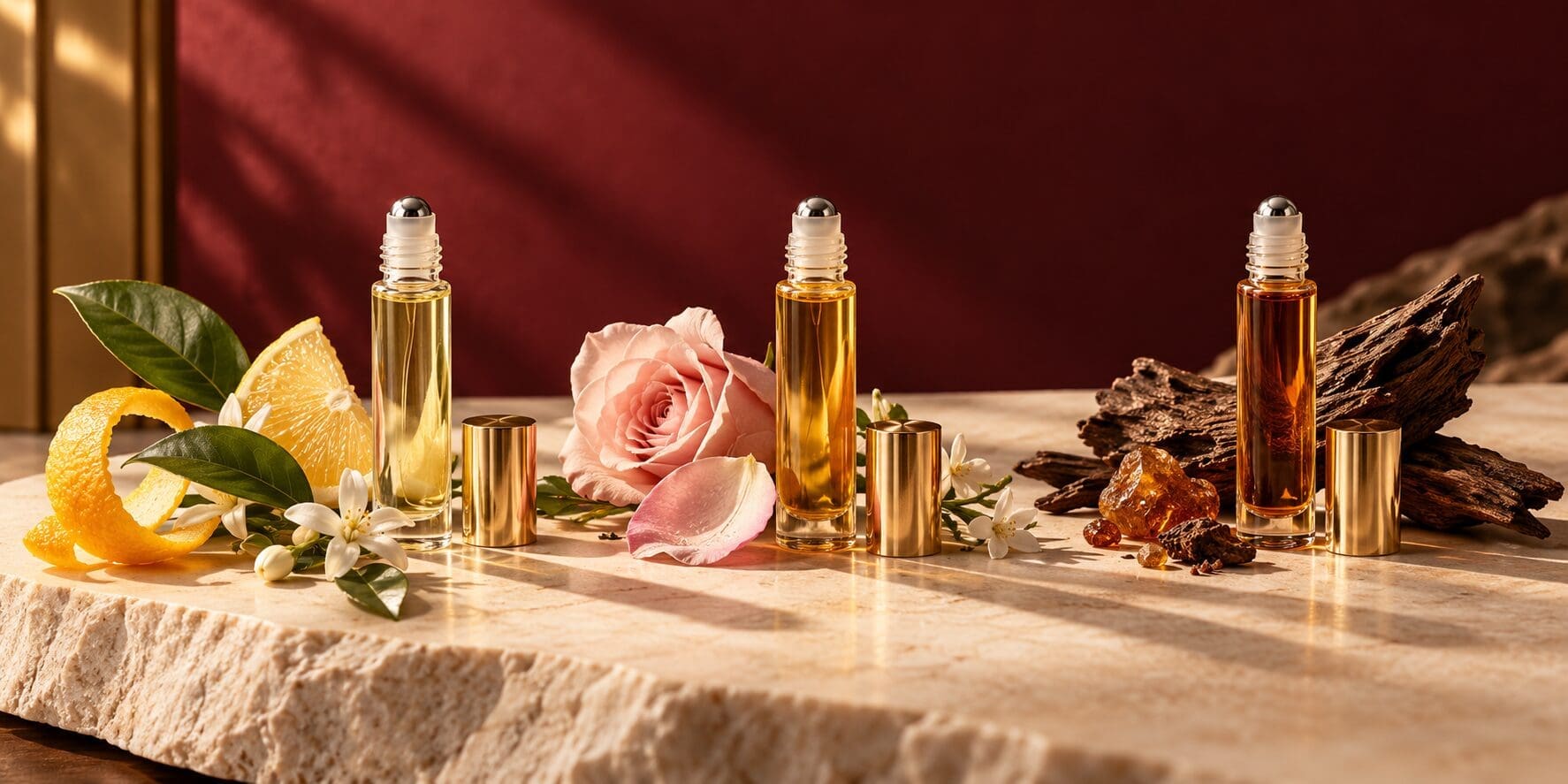
Fragrance rarely has to remain exactly as it first smells. Learn how top, middle and base notes help describe the way scent develops, why these stages can overlap, and how to recognize a fragrance’s opening, heart and deeper foundation.

Learn how temperature, humidity, setting, and application can influence fragrance oil throughout spring, summer, fall, and winter.

Fragrance oil longevity depends on more than concentration. Learn how skin condition, placement, application amount, environment, storage, and thoughtful reapplication can help your fragrance remain present longer.

Fragrance etiquette is about more than wearing less. Learn how environment, projection, reapplication, clothing, and personal presence can help you wear fragrance beautifully and considerately.

Why can a fragrance smell one way in the bottle and another way on you? Explore how skin, warmth, time, and fragrance development shape the experience.

How much fragrance oil should you actually wear? Discover how scent strength, placement, environment, and reapplication can help you create fragrance presence without excess.