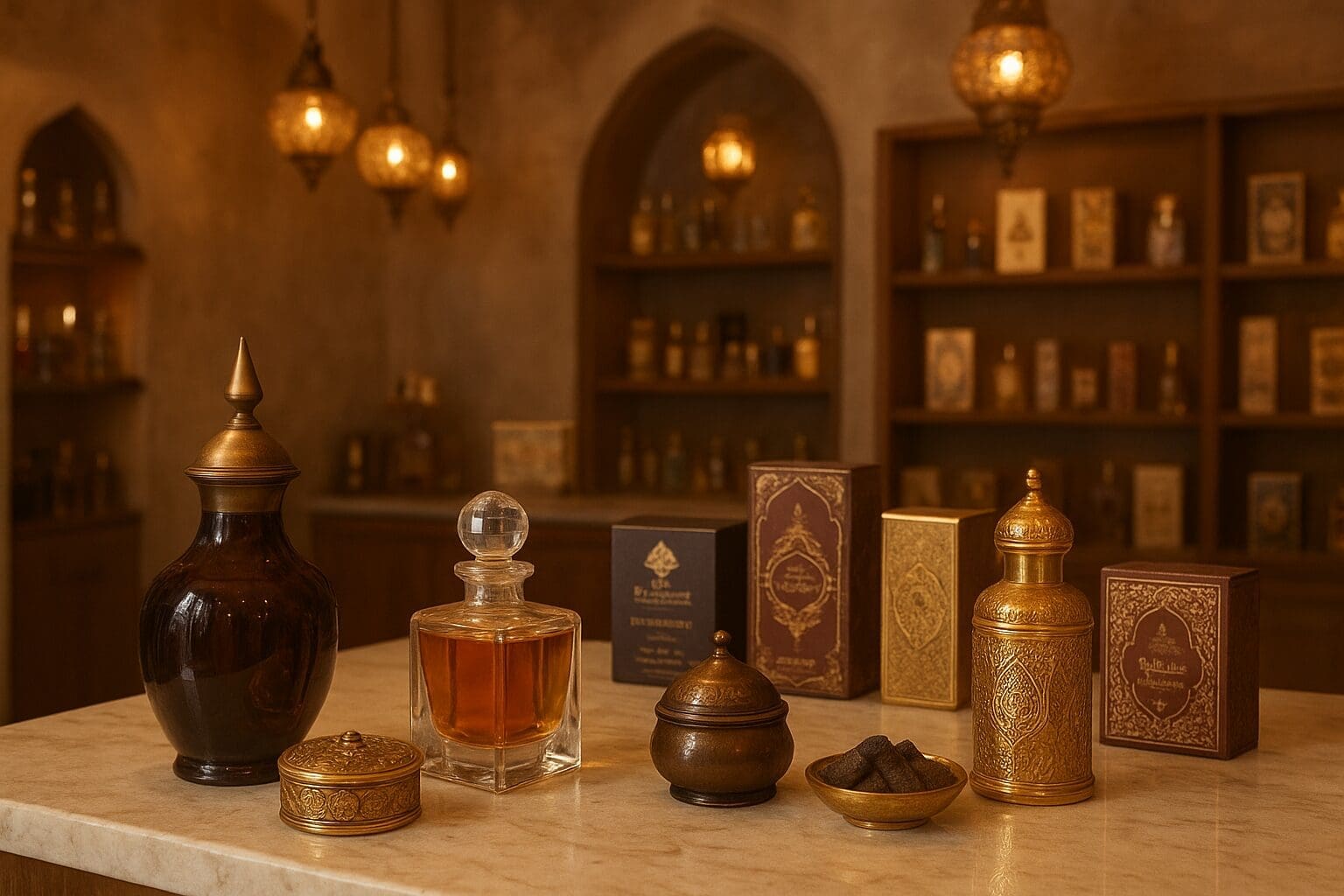
Elegant perfume display in luxurious ornate bottles.

How to Choose the Right Middle Eastern Fragrance

Middle Eastern fragrances are known for their depth, richness, and timeless allure. From the smoky warmth of bakhoor to the luxurious essence of oud, these perfumes carry a unique cultural and sensory heritage. But with so many captivating options available, how do you choose the right Middle Eastern fragrance for yourself? Here’s a guide to help you find the perfect scent.

  1. Understand the Foundations of Middle Eastern Fragrance

Middle Eastern perfumes are built on bold and complex notes, often blending:

  • Oud (Agarwood): Rich, woody, and intense, often referred to as “liquid gold.”
  • Amber: Warm, resinous, and long-lasting, adding depth to compositions.
  • Musk: Soft, sensual, and grounding, used as a base note.
  • Rose: A classic floral note in Arabian perfumery, balancing strength with elegance.
  • Sandalwood & Spices: Earthy and aromatic, creating layers of mystery and warmth.

Knowing these elements helps you identify which accords resonate with your personality.

  1. Consider the Occasion
  • Everyday Wear: Opt for lighter blends with rose, musk, or sandalwood. These create an elegant signature without being overpowering.
  • Special Occasions: Rich oud or amber-based perfumes are perfect for evening wear, weddings, or formal gatherings.
  • Home & Ambience: Bakhoor (fragrant wood chips) is ideal for perfuming clothes, living spaces, or creating a welcoming environment.
  1. Match the Fragrance to Your Personality

Fragrance is deeply personal—it should reflect who you are.

  • Bold & Confident: Oud-heavy perfumes with spices and amber make a strong statement.
  • Romantic & Elegant: Rose-infused attars blended with musk are timelessly graceful.
  • Grounded & Spiritual: Earthy sandalwood and resin-based perfumes often appeal to those seeking balance and calm.
  1. Explore Different Formats

Middle Eastern fragrances come in several forms:

  • Attar (Perfume Oil): Concentrated, alcohol-free, and long-lasting.
  • Eau de Parfum: A more diluted, wearable version with Middle Eastern notes.
  • Bakhoor & Incense: Used to perfume clothing and spaces.

Trying different formats can help you decide which works best for your lifestyle.

  1. Test Before You Commit

Middle Eastern fragrances are powerful, and they evolve with time on the skin. What starts as smoky may settle into a soft, musky finish. Always:

  • Test on your skin, not just a blotter.
  • Let the scent develop for several hours.
  • Start with smaller quantities, such as a tola (12ml bottle), before investing in larger sizes.
  1. Embrace Layering

A unique feature of Middle Eastern perfumery is fragrance layering. You can combine oud oil with rose or musk to create a personal signature scent. Experimentation allows you to make the fragrance truly your own.

Final Thoughts

Choosing the right Middle Eastern fragrance is not just about smelling good—it’s about connecting with a tradition of luxury, spirituality, and artistry that spans centuries. By understanding the ingredients, considering your personality, and experimenting with formats and layering, you’ll discover a scent that feels like an extension of yourself.