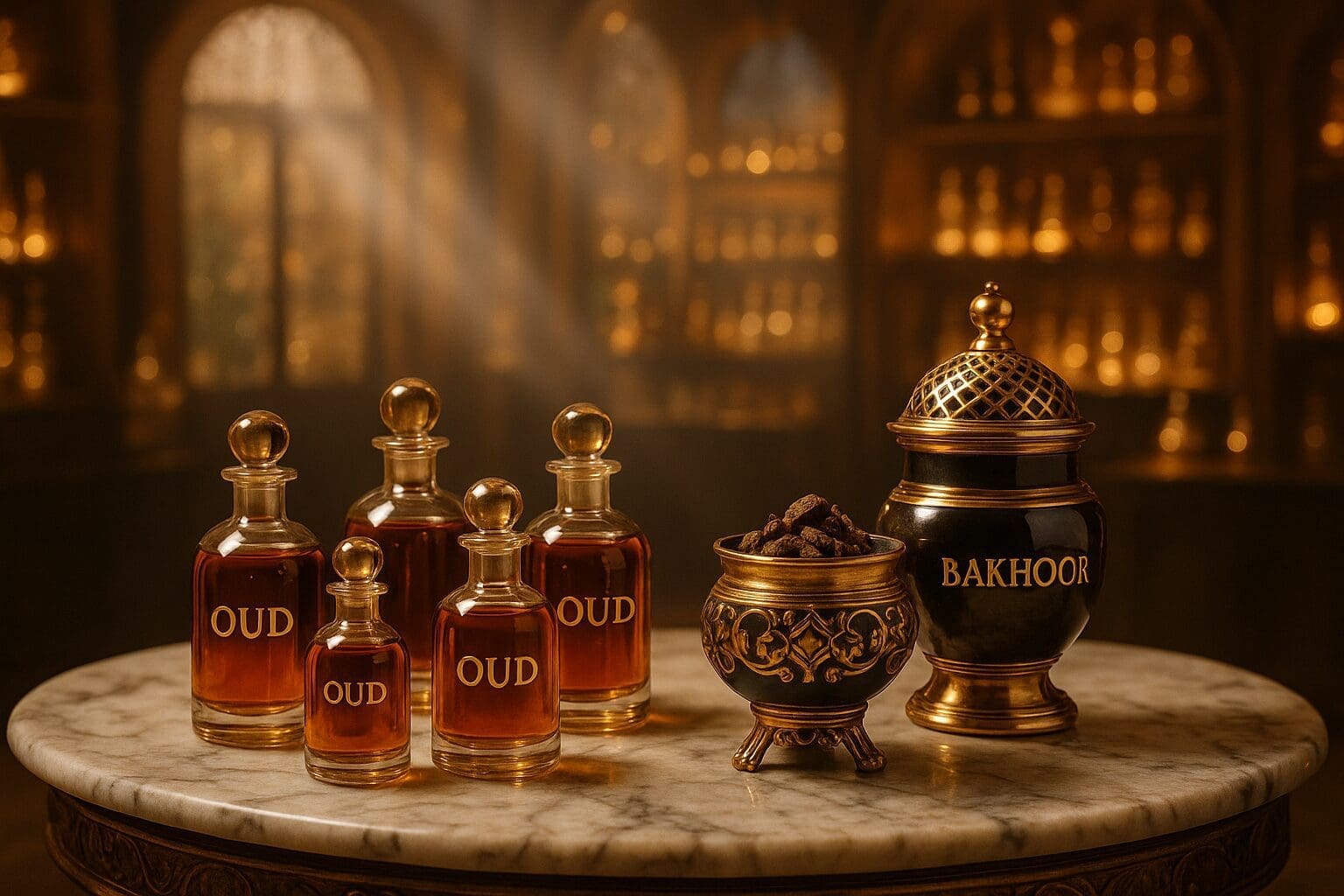
Bakhoor vs Oud: What’s the Difference?
In the world of Middle Eastern fragrance, Bakhoor and Oud are two aromatic treasures that often get confused. While they both offer rich, smoky scents deeply rooted in tradition, they are not the same. Each serves a different purpose, is used in different ways, and offers a unique aromatic experience.
Let’s explore the key differences between Bakhoor and Oud, so you can better appreciate their roles in the world of luxury and cultural perfumery.
What is Oud?
Oud, also known as Agarwood, is a natural resin that forms in the heartwood of Aquilaria trees when they become infected with a specific mold. This resin is rare, precious, and extremely fragrant.
Forms of Oud:
- Oud Chips – Small wood shavings burned to release a rich, deep aroma.
- Oud Oil (Dehn Al Oud) – Pure, concentrated oil extracted from the resin, used in personal perfumery.
- Oud-Based Perfumes – Western and niche perfume brands often include oud in their luxury blends.
Characteristics:
- Scent: Warm, woody, smoky, animalic, and resinous.
- Uses: Worn as oil or burned in ceremonies, luxury homes, or mosques.
What is Bakhoor?
Bakhoor refers to a blend of scented wood chips, soaked in essential oils, resins, and sometimes mixed with rose, musk, amber, or sandalwood. It’s not a natural resin like oud, but a fragrance blend designed for burning.
How It’s Made:
Wood chips (often from sandalwood or agarwood) are soaked in perfumed oils and left to age. The resulting chips are burned on charcoal or an electric burner.
Characteristics:
- Scent: More floral, spicy, or sweet depending on the blend.
- Uses: Scenting homes, clothing, hair, or during social and religious occasions.
Key Differences Between Bakhoor and Oud
| Feature | Bakhoor | Oud |
| Origin | Blended fragrance woodchips | Natural resin from infected Aquilaria tree |
| Form | Treated wood (with oils, perfumes, spices) | Chips, oil, or solid resin |
| Use | Burned for ambience or hospitality | Burned or worn as oil |
| Scent | Varies: sweet, floral, musky, spicy | Deep, woody, leathery, and complex |
| Cultural Use | Weddings, Eid, home gatherings | Daily grooming, luxury fragrance, prayer |
| Price Range | Moderate to luxury, depending on blend | Extremely valuable and rare (especially pure oud) |
Cultural Significance
Both Bakhoor and Oud are essential to Middle Eastern, South Asian, and Islamic traditions. They are used in:
- Friday prayers and mosque rituals
- Wedding celebrations and hospitality
- Scenting garments and hair before gatherings
- Special occasions like Ramadan and Eid
Burning either is a symbol of welcome, spirituality, and beauty.
Final Thoughts
While Bakhoor and Oud may seem similar at first glance — both releasing aromatic smoke and deeply tied to tradition — they are quite different in composition, scent, and use.
If you seek a strong, pure, and ancient aroma, explore oud chips or oudh oil.
If you prefer scent layering, a cozy ambiance, or varied scent profiles, bakhoor is your go-to.
Either way, you’re tapping into centuries of fragrance artistry and cultural richness.
Curious to try both?
Browse our curated collection of authentic Bakhoor and Oud, and discover which speaks to your soul.