
The Science of Fragrance: How Perfume Is Created, Perceived, and Experienced
The Science of Fragrance: How Perfume Is Created, Perceived, and Experienced
Every fragrance tells two stories at once. The first is written by the perfumer through carefully selected aromatic materials. The second is written by the person experiencing it through memory, emotion, culture, and personal identity. Understanding fragrance means appreciating both stories together.
Whether you wear fragrance every day or are only beginning to explore the world of perfume, every scent you encounter represents an extraordinary combination of artistry, chemistry, craftsmanship, and human perception. A fragrance is far more than something that smells pleasant—it is a carefully constructed sensory experience designed to unfold over time.
Behind every bottle is a fascinating process involving natural ingredients, aroma molecules, fragrance accords, evaporation rates, and the remarkable ability of the human brain to recognize and interpret scent. While two people may smell exactly the same perfume, their experiences may be completely different because every individual brings a unique collection of memories and life experiences to that moment.
In this guide, you’ll discover how fragrances are created, how the human nose detects aroma, why perfumes evolve after application, and how Fragrance Intelligence helps explain the complete journey from chemistry to personal experience.
What Is Fragrance?
Fragrance is the perception created when volatile aromatic molecules reach specialized receptors inside the nose. Those molecules may originate from natural materials such as flowers, woods, spices, fruits, herbs, or resins, or they may be carefully developed aroma compounds created through modern fragrance science. Most fine fragrances combine both natural and synthetic ingredients to achieve consistency, longevity, and artistic balance.
The word perfume originates from the Latin phrase per fumum, meaning “through smoke.” Long before liquid perfumes became common, civilizations enjoyed aromatic woods, resins, and incense by heating them over charcoal. This practice laid the foundation for the sophisticated perfumery traditions that continue today.
Modern perfumery blends centuries of artistic tradition with contemporary chemistry. Rather than simply mixing pleasant aromas together, perfumers carefully construct fragrances that reveal different characteristics over time while maintaining harmony from the first spray to the final lingering notes.
A Brief History of Perfumery
The art of perfumery dates back thousands of years. Ancient civilizations throughout Mesopotamia, Egypt, Persia, India, and the Arabian Peninsula valued aromatic materials for personal adornment, hospitality, religious ceremonies, and trade. Precious ingredients such as frankincense, myrrh, sandalwood, rose, amber, and agarwood traveled along historic trade routes, helping establish fragrance as one of humanity’s oldest luxury traditions.
Over the centuries, advances in distillation, extraction, and blending transformed fragrance creation into both an artistic discipline and a scientific craft. Today’s perfumers continue building upon that heritage by combining traditional ingredients with modern innovations that allow greater consistency, safety, and creative freedom.
How Perfumes Are Built
A well-composed fragrance unfolds gradually rather than revealing every aroma at once. Perfumers achieve this effect by carefully balancing ingredients that evaporate at different rates. These stages are commonly described as fragrance notes.
Top Notes
Top notes are the first aromas you notice immediately after applying a fragrance. They are usually lighter and more volatile, creating an initial impression that may last only a few minutes before gradually fading.
Common top notes include citrus fruits, fresh herbs, mint, bergamot, grapefruit, lemon, and certain green accords that create brightness and freshness.
Heart Notes
As the top notes begin to disappear, the heart notes emerge. Sometimes called the middle notes, they form the personality of the fragrance and often remain noticeable for several hours.
Floral accords, spices, soft woods, fruits, aromatic herbs, and gentle resins frequently appear within this stage, creating balance between the freshness of the opening and the richness of the dry down.
Base Notes
The base notes provide depth, warmth, and longevity. These heavier ingredients evaporate more slowly, allowing them to remain on the skin long after the brighter opening notes have faded.
Common base notes include musk, amber, vanilla, patchouli, sandalwood, cedarwood, agarwood (oud), and various resinous materials that create richness and lasting character.
The beauty of fine perfumery lies not in any individual note but in the harmony created as each layer transitions naturally into the next. Experienced perfumers carefully adjust hundreds of variables to ensure the fragrance tells a cohesive story from beginning to end.
How the Human Nose Detects Fragrance
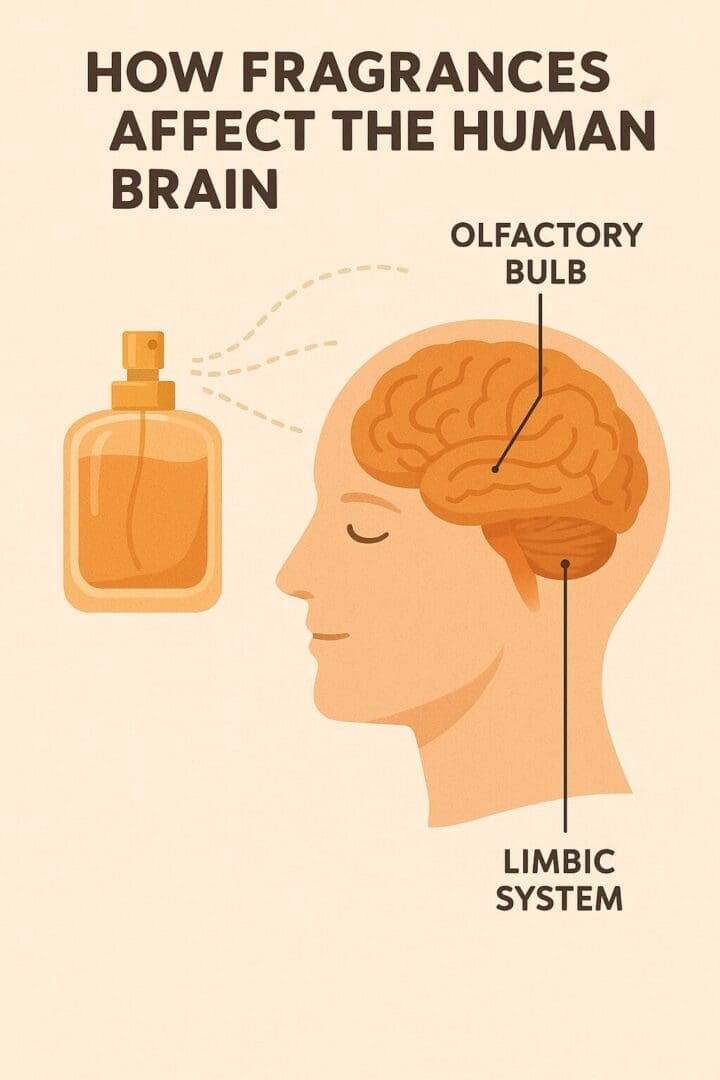
Every time you inhale, thousands of microscopic aroma molecules enter your nasal cavity. These molecules dissolve within a thin protective layer covering the olfactory epithelium, where specialized receptor cells recognize specific molecular characteristics.
When these receptors detect an aroma, they generate electrical signals that travel through the olfactory nerves to the olfactory bulb. From there, the information is distributed to multiple regions of the brain that contribute to recognition, memory, interpretation, and emotional association.
This remarkable biological process happens in fractions of a second. Before you consciously identify a fragrance as woody, floral, fresh, or sweet, your brain has already begun interpreting what the aroma may represent based on previous experiences and learned associations.
Why Two People Experience the Same Fragrance Differently
Have you ever noticed that one person describes a fragrance as comforting while another finds it mysterious, energetic, or even unpleasant? This happens because fragrance is never experienced through chemistry alone. Every aroma is interpreted through the lens of personal experience.
Our preferences are shaped by countless influences throughout life, including childhood memories, family traditions, cultural background, climate, travel, personal milestones, and repeated exposure to certain scents. These experiences create individual fragrance associations that are as unique as fingerprints.
Culture also influences fragrance perception. Notes that symbolize celebration in one part of the world may represent spirituality, hospitality, or everyday life somewhere else. Even within the same family, two people can form completely different emotional connections with the very same fragrance.
Rather than asking whether a fragrance is universally “good,” a better question is:
What does this fragrance mean to me?
This perspective recognizes that fragrance appreciation is both deeply personal and continually evolving. As new experiences accumulate, so do the meanings attached to the fragrances that accompany them.
Fragrance Perception Layers
At Fragrance & Things, we view fragrance as more than aroma alone. Every fragrance passes through multiple layers of perception before it becomes part of your experience. We call this framework Fragrance Perception Layers.
Layer 1: Chemistry
Every fragrance begins as a carefully balanced composition of aromatic materials. Natural ingredients, aroma molecules, and fragrance accords work together to create the scent that reaches your nose.
Layer 2: Detection
Your olfactory receptors recognize volatile aroma molecules and transmit signals to your brain. Without this biological process, fragrance could not be perceived.
Layer 3: Recognition
Your brain begins comparing the fragrance with previous experiences. Does it seem familiar? Does it resemble another fragrance, a place, or a meaningful moment?
Layer 4: Emotion
Recognition often leads to emotional response. Depending on your experiences, the fragrance may evoke curiosity, comfort, confidence, serenity, nostalgia, excitement, or countless other emotions.
Layer 5: Identity
At this stage, you begin asking whether the fragrance reflects who you are. Some fragrances feel immediately authentic, while others feel unfamiliar or inconsistent with your personality.
Layer 6: Behavior
The final layer influences action. A fragrance may become part of your daily routine, accompany important occasions, encourage reflection, or simply become associated with meaningful moments that strengthen your Fragrance Memory over time.
Together, these six layers illustrate that fragrance is not simply smelled—it is interpreted, experienced, and integrated into everyday life.
The Fragrance Intelligence Perspective
Traditional fragrance education often focuses on ingredients and fragrance families. While these are valuable, Fragrance Intelligence expands the conversation by asking how fragrance interacts with memory, identity, environment, and personal experience.
Instead of asking only, “What notes are in this fragrance?” consider asking:
- Why does this fragrance feel familiar?
- What memories does it awaken?
- When would I naturally wear it?
- Does it reflect who I am today?
- What atmosphere does it create?
- How does it complement my lifestyle?
These questions encourage a deeper appreciation of fragrance—one that goes beyond ingredients and into personal meaning.
Frequently Asked Questions
Why do perfumes smell different over time?
Perfumes are designed with top, heart, and base notes that evaporate at different rates. As lighter ingredients fade, deeper notes become more noticeable, allowing the fragrance to evolve throughout the day.
Why does the same fragrance smell different on different people?
Skin chemistry, environment, application method, familiarity, and personal perception all influence how a fragrance is experienced. The fragrance itself remains the same, but each person’s experience may differ.
Are synthetic fragrance ingredients inferior to natural ingredients?
Not necessarily. Modern perfumery uses both natural and synthetic materials to achieve stability, consistency, creativity, and safety. Many celebrated fragrances rely on a thoughtful combination of both.
What are Fragrance Perception Layers?
Fragrance Perception Layers describe the journey from chemistry to human experience, illustrating how aroma progresses through detection, recognition, emotion, identity, and behavior before becoming part of your personal Fragrance Memory.
Continue Your Journey
Discover Your Fragrance Identity
Understanding how fragrance is created is only the beginning. Discover which fragrance family aligns with your personality, preferences, and the experiences that define you.
Take the Fragrance Identity Quiz →The science of fragrance reveals something remarkable: perfume is never simply a collection of ingredients. It is the meeting point of craftsmanship, chemistry, memory, culture, and identity. Every fragrance tells a story, but its final meaning is completed by the person who experiences it. The more we understand that journey, the more intentionally we can choose fragrances that become part of our own lives and memories.


